

Here’s something most homeowners in Frisco don’t think about until there’s a problem: the dryer vent.
You do laundry every week — maybe every other day if you’ve got kids — and your dryer just quietly does its job. But tucked behind that machine is a vent hose running to the outside of your home, and over time it fills up with lint, debris, and moisture buildup that most people never see and never think to clean.
That’s a problem. A potentially dangerous one.
Clogged dryer vents are one of the leading causes of house fires in the United States. According to the U.S. Fire Administration, dryers cause roughly 2,900 house fires every year — and 34% of those are caused by failure to clean the vent. Not a faulty dryer. Not a manufacturing defect. Just a vent that nobody cleaned.
The good news? This is one of the easiest home maintenance tasks to stay on top of once you know what to look for. Let me walk you through everything you need to know, neighbor.
What Is a Dryer Vent (And Why Does It Get Clogged)?
Your dryer works by tumbling wet clothes through hot air and then pushing that hot, humid air — along with lint — out of your home through a vent duct. That duct usually runs from the back of your dryer, through a wall or floor, and exits somewhere on the exterior of your house, either through the siding, the roof, or a crawl space.
Every time you dry a load, tiny lint fibers travel through that duct. Your lint trap catches a lot of them — but not all of them. Over time, the ones that slip through build up on the walls of the duct, narrowing the passage and reducing airflow. Add some humidity to that mix, and you’ve got a compressed, warm, flammable blockage sitting inside your wall.
The longer it goes unaddressed, the worse it gets — and the more your dryer has to work to push air through, which wears out the machine faster and sends your energy bill higher.
How Often Should You Clean Your Dryer Vent?
The general rule of thumb recommended by appliance manufacturers and fire safety experts is:
Clean your dryer vent at least once per year.
But that’s the minimum. Depending on your household, you may need it more often. Here’s a quick guide:
| Household Type | Recommended Frequency |
|---|---|
| 1–2 people, light laundry use | Once a year |
| Family of 3–4, average use | Every 6–12 months |
| Large family (5+), heavy use | Every 6 months |
| Pets in the home (extra lint!) | Every 6 months |
| Long vent duct run (15+ feet) | Every 6 months |
| Flexible plastic duct (older homes) | Every 3–6 months |
If your dryer vent exits through the roof rather than through the side of the house, those runs are typically longer and have more bends, which means lint builds up faster. Those homes should lean toward the more frequent end of the scale.
One more thing worth knowing: the type of duct material matters. Flexible plastic accordion-style ducts (common in older homes) are far more prone to lint accumulation than rigid metal ducts, because lint clings to the ridges. If your home still has the plastic flex duct, it’s worth upgrading — it’s a relatively inexpensive improvement that makes a real difference in both safety and efficiency.
7 Warning Signs Your Dryer Vent Needs Cleaning Now
Don’t wait for the annual reminder if your dryer is already showing symptoms. Here are the warning signs I want you to know, because catching these early can save you from a service call — or something much worse.
1. Your Clothes Are Taking Longer to Dry
This is usually the first thing people notice. A load that used to take 45 minutes is now taking an hour and fifteen. Sometimes people run a second cycle and just assume their dryer is getting old.
Before you go shopping for a new dryer, check the vent. Reduced airflow is the most common reason a dryer underperforms, and it’s almost always vent-related. A clean vent can make your dryer feel brand new again.
2. Your Clothes Feel Unusually Hot When They Come Out
If your laundry is coming out of the dryer scorching hot — or your dryer itself feels extremely hot to the touch on the outside — that’s a sign that heat isn’t venting properly. It’s building up inside the machine instead of exhausting out. This puts serious stress on the dryer’s heating element and is a precursor to fire risk.
3. You Notice a Burning Smell
This one should stop you in your tracks. A burning smell — even a faint one — while the dryer is running is a serious red flag. That smell is likely lint that has gotten hot enough to begin singeing. Turn the dryer off, don’t run another cycle, and get the vent inspected and cleaned before using it again.
4. The Laundry Room Feels Hot and Humid While the Dryer Runs
Your dryer is supposed to push hot, moist air outside your home. If your laundry room feels like a sauna while it’s running, that air isn’t going where it’s supposed to. Either the vent is severely blocked, or there’s a disconnection somewhere in the duct line.
5. The Exterior Vent Flap Isn’t Opening Properly
Go outside and find where your dryer vent exits the house. It should have a flap (called a damper) that opens when the dryer is running and closes when it’s off. Run your dryer and check it — you should feel a clear rush of warm air coming out. If the flap barely opens, or you feel very little airflow, the duct is restricted.
6. You Can See Lint Around the Dryer Hose or Behind the Machine
If lint is visibly collecting behind your dryer, around the hose connection, or on the floor near the machine, that’s lint that couldn’t make it through the vent. It’s a reliable indicator that the vent is backing up.
7. It’s Been Over a Year Since You Last Cleaned It
Honestly? If you can’t remember the last time the dryer vent was cleaned — or you’ve never had it done — that’s enough of a warning sign right there. Don’t wait for symptoms. At that point, the buildup is likely already significant.
The Lint Trap Is Not Enough
Let me address something I hear often: “I clean my lint trap after every load — isn’t that enough?”
It’s great that you’re doing that, and you absolutely should keep doing it. But the lint trap only catches the lint in the dryer itself. It does nothing for the duct that runs from the back of your machine to the outside of the house — and that’s where the real buildup happens.
Think of the lint trap like a strainer in your kitchen sink. It catches the big stuff, but smaller particles still slip through into the pipes. Same concept. Your vent duct is the pipe, and over months and years, it needs to be cleared out.
Can You Clean the Dryer Vent Yourself?
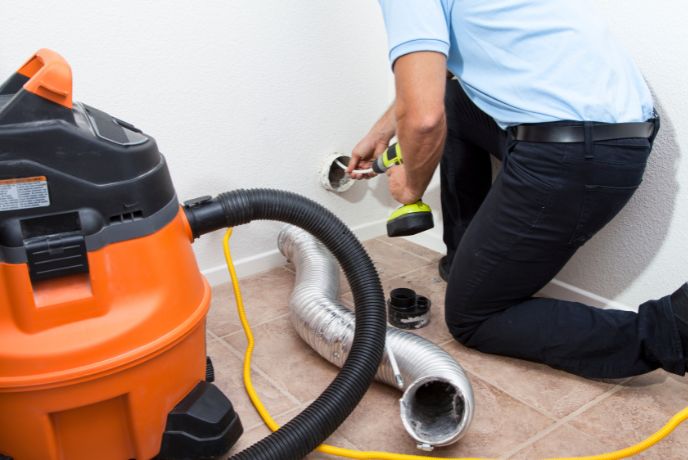
For some homeowners, yes — a basic dryer vent cleaning is a DIY-able project. You can buy a dryer vent cleaning kit at most hardware stores for around $20–$30. These kits include a long flexible brush that attaches to a drill and lets you scrub out the duct from the back of the dryer.
This works reasonably well if:
- Your vent run is short (under 10 feet)
- The duct runs in a relatively straight line with few bends
- You’re comfortable moving your dryer and working in tight spaces
You’ll want to call a professional if:
- Your vent run is long or has multiple 90-degree bends
- Your vent exits through the roof (these are tricky to clean from the inside)
- You suspect a disconnect or damage somewhere in the duct line
- You’ve noticed any of the serious warning signs above, like a burning smell
A professional cleaning ensures the entire duct is cleared — not just the section closest to the dryer — and includes a visual inspection to check for any disconnections, kinks, or damage that could be causing problems.
A Quick Word About Dryer Vent Safety for Frisco Homes
Here in Frisco and the surrounding North Dallas area, our summers are brutal. Running a dryer in a hot house with a restricted vent during July and August is especially hard on the machine — and the risk of overheating goes up when it’s already 105 degrees outside. Spring is actually the perfect time to get this taken care of, before the summer heat hits.
It’s also worth knowing that many homeowner’s insurance policies expect you to perform basic maintenance on your appliances. A dryer fire caused by a neglected vent is an uncomfortable conversation to have with your insurance company.
Dryer Vent Cleaning Checklist
Here’s a simple checklist to keep things on track:
- Clean the lint trap after every single load — every time, no exceptions
- Check behind the dryer every few months for visible lint accumulation
- Test the exterior vent flap — it should open fully when the dryer runs
- Schedule a full vent cleaning at least once a year (every 6 months for busy households)
- Inspect the duct connection at the back of the dryer for any looseness or kinks
- Consider upgrading from plastic flex duct to rigid metal duct if yours is old
- Mark your calendar — set a yearly reminder so it doesn’t slip through the cracks
Don’t Wait Until Something Goes Wrong
I’ve seen the aftermath of dryer fires, and I promise you — no amount of busy schedule or “I’ll get to it eventually” is worth that risk. This is one of those home maintenance tasks that takes maybe an hour once a year and gives you genuine peace of mind.
If you’re in the Frisco, McKinney, Prosper, Little Elm, or Celina area and you’d like me to come out and take care of your dryer vent cleaning, I’d be happy to help. I’ll clean the vent, inspect the duct, check the exterior cap, and make sure everything is flowing the way it should be.
It’s a small job with a big payoff — and one less thing on your worry list.
Ready to get it taken care of?
📞 Call or text me at (469) 971-2052 📧 hello@cornerstonehandyworks.com 🗓️ Schedule your free quote online →
Mike Ingles is the owner of Cornerstone Handyworks, a local handyman service proudly serving Frisco, TX and the surrounding North Dallas communities. Built on trust. Grounded in faith.